
Species · Omnivore rodent
African Pygmy Mouse
Mus minutoides
A thumbnail-sized mouse that stacks pebbles to drink the morning dew, and will vanish through the tiniest gap the moment you look away.
Difficulty: Intermediate Printable care sheet →
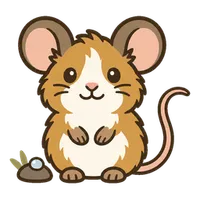
The African pygmy mouse is one of the smallest rodents in the world, an adult weighing only a few grams and measuring a couple of centimetres in the body. In the wild across sub-Saharan Africa they live in colonies or pairs in grass near water, and they have a charming trick of stacking small pebbles at their burrow so dew collects overnight for them to drink. As pets they are best thought of as a living terrarium display: quick, curious, and endlessly busy, but far too tiny and delicate to handle. Kept warm, in a sealed glass tank, in a small same-sex group, they are a delight to watch. They ask for patience and careful setup rather than cuddles.
Care at a glance
| Adult size | Tiny. Adults are roughly 30 to 80 mm (about 3 to 6 cm) in head-and-body length with a 20 to 40 mm tail, and weigh only about 3 to 12 g (average around 5 to 8 g), one of the smallest rodent species kept as a pet. Their size is exactly why escape and fragility are the central concerns. |
|---|---|
| Lifespan | Short-lived. Typically about 2 years, sometimes 2 to 3 years with good care, and exceptional captive individuals have been recorded living over 4 years (one documented at 4.3 years). |
| Enclosure | Escape is the number-one practical problem: these mice fit through standard cage bars and mesh and can jump around 50 cm, so a wire cage is not safe. Use a well-ventilated glass or acrylic tank with a tight, fully sealed lid (fine no-see-um mesh or a secured ventilated top) and no gaps a pinky-tip could pass. A minimum of roughly 30 x 30 x 30 cm (about 12 inches each way) suits a small colony, and taller is welcome because they climb well. Check every seam and lid catch, because a single missed gap means a lost mouse. |
| Companionship | African pygmy mice are highly social and should never be kept alone; they do best in pairs or small colonies. Because they breed so readily, keep same-sex groups to prevent runaway litters, a mixed pair can produce litters continuously. Females generally live together more peacefully than males, and too many males in a group can lead to fighting, so all-female or carefully monitored small all-male groups are usual. Correct sexing of such a tiny animal is genuinely difficult when young, so buy from a knowledgeable source and be prepared for the possibility of mis-sexed animals. |
| Temperature | Warmth-loving. A stable, draft-free room temperature in the range of about 21 to 26°C (roughly 70 to 78°F) is commonly recommended, and they should not be kept cold, keep them reliably above about 15 to 16°C (60°F) at minimum. Avoid drafts, direct sun on the glass, and sudden temperature swings. If your home runs cool, gentle supplemental warmth (never a hot spot they cannot escape) may be needed. |
| Bedding & substrate | Use a soft, dust-low, paper-based bedding or other safe soft substrate deep enough to burrow in, plus soft nesting material. Avoid cedar and pine shavings, whose aromatic oils are linked to respiratory irritation in small rodents. A layer they can dig and tunnel through supports natural behaviour. |
| Enrichment & exercise | Provide plenty to explore: tunnels, small hides, nesting material, and secure climbing structures and branches, since they are excellent climbers. Foraging opportunities (scattering seed in bedding) suit their natural granivore habits. A safe, solid-surface (not wire-rung) small wheel can be offered. Enrichment matters more here than handling, because these are animals you enrich and observe rather than pick up. |
| Grooming & upkeep | No grooming is needed, they keep themselves clean. Do not bath them. Because they are so small and stress-prone, minimise disturbance; spot-clean rather than doing heavy full cleanouts that reset all their scent and can distress a colony. |
| Diet | Omnivore leaning heavily herbivore/granivore. In the wild the bulk of the diet is seeds, grains and plant matter, with insects taken opportunistically (proportions vary by region). In captivity offer a base of a good-quality small-rodent/mouse mix or pellet, small seeds such as millet, and small amounts of suitable fresh greens, with occasional insects (for example a small mealworm) for animal protein. Feed modestly, do not overfeed, as pygmy mice can become obese. Provide fresh water daily in a shallow dish or a tiny bottle. |
| Supplements | No routine supplements are required if a varied, appropriate diet is fed; occasional insect protein and fresh greens cover most needs. Do not add supplements without an exotic vet's guidance, since dosing anything for an animal this small is very hard to get right. |
🤎 Did you know? — African Pygmy Mouse fun facts
Little true delights about the african pygmy mouse — each one checked against a named source, no pet-shop myths.
- African pygmy mice stack tiny pebbles outside their burrow so dew collects on them overnight — then drink the droplets at dawn. Wikipedia
- They're among the smallest rodents on Earth — an adult weighs only about 5 grams, roughly the weight of a sheet of paper. AnAge / Human Ageing Genomic Resources
- A pygmy mouse can leap around 50 cm — many times its own body length — which is exactly why it needs a sealed tank, not a barred cage. Wikipedia
What it's like to live with a African Pygmy Mouse
Set your expectations to watch, don't cuddle. These mice are extraordinarily fast and so tiny that ordinary handling risks internal injury, and a startled mouse may leap suddenly and be lost or hurt. They are not tameable lap pets; the reward is observing a busy little colony going about its day and night (they are active around the clock). If you must move them, herd them into a container rather than grabbing. Handle over a low, enclosed surface only when truly necessary, and keep it brief.
Your first month together
The settling-in period, in order — so you know what's normal and when not to worry.
- Before the mouse arrives, set up and stress-test the tank: run your fingers over every seam and the lid, and confirm there is no gap a fingertip could pass, escape-proofing comes first.
- Get the room warm and stable (around 21 to 26°C / 70 to 78°F, draft-free) and let the enclosure settle before adding animals.
- For the first week or two, mostly leave them alone to settle: fresh food and water daily, minimal disturbance, and quiet observation rather than handling.
- Confirm the group is same-sex and getting along; watch for fighting (especially among males) and for any unexpected pregnancy or pups.
- Learn each mouse's normal look and behaviour now (activity, breathing, coat, appetite) so you can spot trouble early in such a small, hard-to-examine animal.
Through the year, and as they grow
They can breed year-round when kept warm and well fed, which is a reason to house same-sex groups; if your home cools in winter, protect them from chills and drafts.
The pet store gets these wrong
Common myths, kindly corrected — no shame for having believed them.
- Myth: a single mouse is fine on its own. Kind correction: they are highly social and should always be kept in pairs or small groups.
- Myth: any mouse cage will hold them. Kind correction: they fit through standard bars and mesh and jump ~50 cm; only a sealed glass or acrylic tank is safe.
- Myth: you can tame and handle them like a pet mouse. Kind correction: they are too tiny, fast and fragile; they are an observation pet, not a handling pet.
- Myth: they're basically the same as an African pygmy dormouse. Kind correction: the pygmy dormouse (Graphiurus) is a different, unrelated climbing species; care details differ, and online guides often mix them up.
- Myth: they barely need water because they're desert-tough. Kind correction: they do need fresh water daily; in the wild they cleverly drink dew, but captive mice must always have water available.
Before you buy
- You want a pet to watch, not to hold, handling is genuinely unsafe for them.
- You can provide a sealed glass or acrylic tank and are confident about escape-proofing every gap.
- You can keep them reliably warm and draft-free year-round.
- You are prepared to keep a same-sex group and to deal with the risk of mis-sexed animals and accidental litters.
- You have located an exotic-savvy vet in advance, knowing that treating an animal this small is difficult.
- You accept a short lifespan (often around 2 to 3 years) and the ongoing commitment to a small colony.
- You are buying from a knowledgeable breeder or keeper source, not an impulse purchase.
Working out the budget? See how much a african pygmy mouse really costs to keep — the honest upfront-vs-ongoing breakdown (the african pygmy mouse itself is usually the cheapest part).
See a vet if…
We can't diagnose from afar — but these are the signs to stop watching and get a professional:
- Any laboured, rapid or noisy breathing, or discharge from eyes/nose, respiratory illness in an animal this tiny escalates fast.
- A mouse sitting hunched, fluffed-up, lethargic, or refusing food or water.
- Visible weight loss, a bony or sunken look, or a swollen belly.
- Wounds, limping, or signs of fighting injuries (more common in male groups).
- Diarrhoea, a dirty or wet rear end, or straining.
- Any lump, growth, or eye that looks cloudy, bulging or injured.
- A pregnant or straining female in difficulty, or a mother that seems to be abandoning or eating pups. Because pygmy mice are so small, examination and treatment are hard, see an exotic vet early rather than waiting.
Heading to the vet? Print the free African Pygmy Mouse vet-prep sheet — how to find an exotic-mammal vet, what to bring, and what to tell them.
Never
- Never keep one alone, isolation is a welfare problem for this social species.
- Never house them in a wire or barred cage, or any enclosure with mesh/gaps they can slip through or jump out of.
- Never house a mixed-sex group unless you intend continuous breeding, they reproduce extremely fast.
- Never handle them casually or grab a fast-moving mouse, their tiny bodies are easily injured internally.
- Never use cedar or pine shavings.
- Never let them get cold or sit in drafts, direct sun, or big temperature swings.
Common african pygmy mouse questions
How hard are African Pygmy Mouses to keep — are they good for beginners?
Intermediate. African pygmy mice are among the smallest rodents on earth, and that tiny size is the whole challenge. They squeeze through gaps you would swear were too small, jump many times their own height, and are far too fragile and fast to handle the way you would a fancy mouse or a hamster. They are a rewarding watch-not-cuddle pet for a patient keeper, but the escape-proofing and hands-off care put them a step above a beginner rodent.
What do African Pygmy Mouses eat?
Omnivore leaning heavily herbivore/granivore. In the wild the bulk of the diet is seeds, grains and plant matter, with insects taken opportunistically (proportions vary by region). In captivity offer a base of a good-quality small-rodent/mouse mix or pellet, small seeds such as millet, and small amounts of suitable fresh greens, with occasional insects (for example a small mealworm) for animal protein. Feed modestly, do not overfeed, as pygmy mice can become obese. Provide fresh water daily in a shallow dish or a tiny bottle.
How big an enclosure do African Pygmy Mouses need?
Escape is the number-one practical problem: these mice fit through standard cage bars and mesh and can jump around 50 cm, so a wire cage is not safe. Use a well-ventilated glass or acrylic tank with a tight, fully sealed lid (fine no-see-um mesh or a secured ventilated top) and no gaps a pinky-tip could pass. A minimum of roughly 30 x 30 x 30 cm (about 12 inches each way) suits a small colony, and taller is welcome because they climb well. Check every seam and lid catch, because a single missed gap means a lost mouse.
Do African Pygmy Mouses need a companion, or can they live alone?
African pygmy mice are highly social and should never be kept alone; they do best in pairs or small colonies. Because they breed so readily, keep same-sex groups to prevent runaway litters, a mixed pair can produce litters continuously. Females generally live together more peacefully than males, and too many males in a group can lead to fighting, so all-female or carefully monitored small all-male groups are usual. Correct sexing of such a tiny animal is genuinely difficult when young, so buy from a knowledgeable source and be prepared for the possibility of mis-sexed animals.
What temperature do African Pygmy Mouses need?
Warmth-loving. A stable, draft-free room temperature in the range of about 21 to 26°C (roughly 70 to 78°F) is commonly recommended, and they should not be kept cold, keep them reliably above about 15 to 16°C (60°F) at minimum. Avoid drafts, direct sun on the glass, and sudden temperature swings. If your home runs cool, gentle supplemental warmth (never a hot spot they cannot escape) may be needed.
What bedding and substrate do African Pygmy Mouses need?
Use a soft, dust-low, paper-based bedding or other safe soft substrate deep enough to burrow in, plus soft nesting material. Avoid cedar and pine shavings, whose aromatic oils are linked to respiratory irritation in small rodents. A layer they can dig and tunnel through supports natural behaviour.
What enrichment and exercise do African Pygmy Mouses need?
Provide plenty to explore: tunnels, small hides, nesting material, and secure climbing structures and branches, since they are excellent climbers. Foraging opportunities (scattering seed in bedding) suit their natural granivore habits. A safe, solid-surface (not wire-rung) small wheel can be offered. Enrichment matters more here than handling, because these are animals you enrich and observe rather than pick up.
What grooming and upkeep do African Pygmy Mouses need?
No grooming is needed, they keep themselves clean. Do not bath them. Because they are so small and stress-prone, minimise disturbance; spot-clean rather than doing heavy full cleanouts that reset all their scent and can distress a colony.
What supplements do African Pygmy Mouses need?
No routine supplements are required if a varied, appropriate diet is fed; occasional insect protein and fresh greens cover most needs. Do not add supplements without an exotic vet's guidance, since dosing anything for an animal this small is very hard to get right.
How big do African Pygmy Mouses get?
Tiny. Adults are roughly 30 to 80 mm (about 3 to 6 cm) in head-and-body length with a 20 to 40 mm tail, and weigh only about 3 to 12 g (average around 5 to 8 g), one of the smallest rodent species kept as a pet. Their size is exactly why escape and fragility are the central concerns.
How long do African Pygmy Mouses live?
Short-lived. Typically about 2 years, sometimes 2 to 3 years with good care, and exceptional captive individuals have been recorded living over 4 years (one documented at 4.3 years).
What are the signs African Pygmy Mouses are sick or need a vet?
See a small-animal or exotics vet if you notice: Any laboured, rapid or noisy breathing, or discharge from eyes/nose, respiratory illness in an animal this tiny escalates fast.; A mouse sitting hunched, fluffed-up, lethargic, or refusing food or water.; Visible weight loss, a bony or sunken look, or a swollen belly.; Wounds, limping, or signs of fighting injuries (more common in male groups).; Diarrhoea, a dirty or wet rear end, or straining.; Any lump, growth, or eye that looks cloudy, bulging or injured.; A pregnant or straining female in difficulty, or a mother that seems to be abandoning or eating pups. Because pygmy mice are so small, examination and treatment are hard, see an exotic vet early rather than waiting..
Free tools for your african pygmy mouse

Get the free African Pygmy Mouse Starter Kit
A one-page setup-criteria checklist and a first-30-days plan for your first african pygmy mouse — what to get, what makes each thing matter, and the honest bits the pet shop skips. Join the fold and we’ll send it over. Free guides and tools always stay open, no gatekeeping.
Honest small-pet care, straight to your inbox. No spam — unsubscribe anytime. See how we handle your data in our privacy notice.Sources & further reading
This guide was written and fact-checked against these authorities. It's kind, general guidance — not a diagnosis or a substitute for an exotics vet:
- Wikipedia – African pygmy mouse (Mus minutoides) — Body length ~50 mm avg (range 30–80 mm), tail ~40 mm, weight ~3–12 g (avg ~5 g); lifespan ~2 yr, >4 yr in captivity; breeding maturity 6–8 wk, gestation ~20 days; jumps up to 50 cm; social (keep pairs/colonies); dew-on-pebbles drinking; grass near water; active day and night.
- AnAge / Human Ageing Genomic Resources – Mus minutoides — Maximum longevity 4.3 years (captive); female sexual maturity 60 days, male 77 days; gestation 20 days; adult body mass ~7.2–8.0 g; corroborates size, lifespan and breeding numbers.
- Sands Exotic Animals – Pygmy Mouse Care — Escape-proof glass/fine-mesh tank, min ~12x12x12 in for a small colony; temperature 70–78°F stable and draft-free; paper-based bedding, avoid cedar/pine; diet of small-rodent pellet + seeds + greens + occasional mealworms, don't overfeed (obesity risk); highly social small groups; too small/fast to handle; fresh water daily.
- Britannica – Pygmy mouse (rodent) — General reference corroborating that pygmy mice (Mus) are among the smallest rodents, native to sub-Saharan Africa, seed/grain feeders.
- US Fish & Wildlife Service – Southern African Pygmy Mouse — Authoritative species/range reference confirming identity and native distribution; diet varying regionally (insects/seeds, some foliage) and habitat.
Written and fact-checked by The Hayfold Team against veterinarian-authored sources — if your pet shows a red-flag sign above, see an exotics/small-animal vet promptly.