
Species · Omnivore rodent
Flying Squirrel
Glaucomys volans
A tiny, nocturnal gliding rodent that bonds intensely — long-lived and social, but prone to diet-driven bone disease and illegal in many US states.
Difficulty: AdvancedPrintable care sheet →
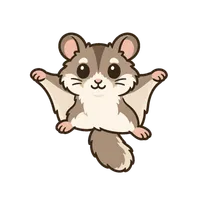
Southern flying squirrels are tiny, nocturnal, gliding rodents that soar between branches on a furred membrane and bond intensely with a patient keeper. They’re social, surprisingly long-lived, and — done right — captivating. But they’re a serious commitment: illegal or permit-only across much of the US, prone to diet-driven bone disease, and active only at night. This is the honest guide, including where exact husbandry numbers aren’t well documented.
Care at a glance
| Adult size | Total length about 200–285 mm (roughly 8–11 in), weighing about 38–90 g. |
|---|---|
| Lifespan | Wild animals average 3–5 years, but in captivity they’re long-lived — around 10 years on average, with a maximum near 19 years. |
| Enclosure | A tall, escape-proof cage with branches to climb and glide, and a nest box placed high — they’re arboreal and glide, so vertical space matters far more than floor area. (Authorities don’t publish exact dimensions or safe bar-spacing for pet flying squirrels, so aim for as tall and secure as possible rather than a fixed number, and confirm a safe wheel/setup with an exotic vet.) Keep bedding clean and dry. |
| Companionship | Social animals that do best with a companion, and they bond strongly to their keeper — a lone, ignored flying squirrel does poorly, and daily interaction (hand-feeding in the early weeks) builds the bond. Rehoming is hard on them once bonded. |
| Temperature | Keep them warm and stable indoors. In severe cold they enter torpor and stay nested for days, which can be mistaken for illness — so avoid letting them get cold. (Exact numeric temperature ranges aren’t well documented by authorities, so keep them comfortably warm rather than to a fixed figure.) |
| Bedding & substrate | A high nest box and clean, dry bedding/nesting material. Natural nests are in tree cavities, so provide an enclosed, elevated nest. |
| Enrichment & exercise | Branches to climb and glide between, safe toys, foraging, and out-of-cage exercise time in a safe space to prevent obesity — they’re highly active at night. (Wire wheels can be unsafe for a gliding-membrane animal — confirm any wheel with an exotic vet.) |
| Grooming & upkeep | They’re rodents that chew constantly (incisors grow for life) and can give a sharp bite, so provide safe chew material. Otherwise their grooming needs are low. |
| Diet | A true omnivore — among the most carnivorous of squirrels. The diet should include protein (insects such as mealworms and crickets), plus nuts, fruit and vegetables. The critical risk is calcium balance: a nut/seed/corn-heavy diet is high in phosphorus and low in calcium, which drives metabolic bone disease. A calcium-adequate, balanced diet (correct calcium-to-phosphorus ratio) is essential. Fresh water always available. |
| Supplements | They’re prone to calcium deficiency and typically need a calcium supplement, with vitamin D3 (via diet or appropriate light) to use it — but D3 dosing must be vet-supervised, since over-supplementation is harmful. Have an exotic vet set the calcium/D3 plan. |
🤎 Did you know? — Flying Squirrel fun facts
Little true delights about the flying squirrel — each one checked against a named source, no pet-shop myths.
- Flying squirrels don’t actually fly — they glide on a furred flap of skin and steer with a flattened tail, up to about 28 metres in a leap.Animal Diversity Web
- Under ultraviolet light every North American flying squirrel glows bright pink — a surprise only discovered in 2019.Kohler et al., J. Mammalogy (2019)
- Strictly nocturnal with big night-eyes, in cold weather as many as 20 flying squirrels will pile into one nest for warmth.Animal Diversity Web
The pet store gets these wrong
Common myths, kindly corrected — no shame for having believed them.
- They’re not a daytime pet — they’re strictly nocturnal and active/noisy at night.
- They shouldn’t be kept alone and ignored — they’re social and bond intensely; neglect and rehoming hurt them.
- A nut/seed-heavy diet causes crippling bone disease — calcium balance (and vet-guided D3) is essential.
- They’re illegal or permit-only in many US states — check the law before considering one.
- Cold makes them torpid, not lazy — keep them warm; torpor can look like illness.
Before you buy
- Is it legal where you live? Flying squirrels are illegal or permit-only in much of the US — check state AND local law first.
- Can you provide a companion and a tall, escape-proof gliding cage with a high nest box?
- Can you feed a calcium-balanced, protein-inclusive diet and follow a vet’s calcium/D3 plan (to prevent bone disease)?
- Are you set up for a strictly nocturnal pet that’s active and noisy at night?
- Can you commit for potentially a decade or more, and source ethically (captive-bred, never wild-caught)?
See a vet if…
We can't diagnose from afar — but these are the signs to stop watching and get a professional:
- Weakness, bendy limbs or fractures, tremors or seizures — metabolic bone disease is an emergency; see an exotic vet
- Not eating, weight loss or lethargy
- A cold, torpid animal when it shouldn’t be — warm gently and seek advice
- Signs of parasites (lice/fleas), or any wound
Never
- Never keep a flying squirrel where it’s illegal, or without checking permit rules.
- Never feed a nut/seed/corn-heavy diet without calcium balance — it causes bone disease.
- Never keep one alone and ignored — they need company and interaction.
- Never buy a wild-caught animal (trafficking is a real problem) — source captive-bred.
- Never assume a standard wire wheel is safe for a gliding-membrane animal.
Common flying squirrel questions
How hard are Flying Squirrels to keep — are they good for beginners?
Advanced. A tiny, strictly nocturnal gliding rodent that bonds intensely and is illegal or permit-only in much of the US — check the law first. It needs a companion and a tall gliding cage, is highly prone to metabolic bone disease without careful calcium and vitamin-D3 balance, chews constantly, and can bite. Long-lived (often a decade), so a real commitment.
What do Flying Squirrels eat?
A true omnivore — among the most carnivorous of squirrels. The diet should include protein (insects such as mealworms and crickets), plus nuts, fruit and vegetables. The critical risk is calcium balance: a nut/seed/corn-heavy diet is high in phosphorus and low in calcium, which drives metabolic bone disease. A calcium-adequate, balanced diet (correct calcium-to-phosphorus ratio) is essential. Fresh water always available.
How big an enclosure do Flying Squirrels need?
A tall, escape-proof cage with branches to climb and glide, and a nest box placed high — they’re arboreal and glide, so vertical space matters far more than floor area. (Authorities don’t publish exact dimensions or safe bar-spacing for pet flying squirrels, so aim for as tall and secure as possible rather than a fixed number, and confirm a safe wheel/setup with an exotic vet.) Keep bedding clean and dry.
Do Flying Squirrels need a companion, or can they live alone?
Social animals that do best with a companion, and they bond strongly to their keeper — a lone, ignored flying squirrel does poorly, and daily interaction (hand-feeding in the early weeks) builds the bond. Rehoming is hard on them once bonded.
What temperature do Flying Squirrels need?
Keep them warm and stable indoors. In severe cold they enter torpor and stay nested for days, which can be mistaken for illness — so avoid letting them get cold. (Exact numeric temperature ranges aren’t well documented by authorities, so keep them comfortably warm rather than to a fixed figure.)
What bedding and substrate do Flying Squirrels need?
A high nest box and clean, dry bedding/nesting material. Natural nests are in tree cavities, so provide an enclosed, elevated nest.
What enrichment and exercise do Flying Squirrels need?
Branches to climb and glide between, safe toys, foraging, and out-of-cage exercise time in a safe space to prevent obesity — they’re highly active at night. (Wire wheels can be unsafe for a gliding-membrane animal — confirm any wheel with an exotic vet.)
What grooming and upkeep do Flying Squirrels need?
They’re rodents that chew constantly (incisors grow for life) and can give a sharp bite, so provide safe chew material. Otherwise their grooming needs are low.
What supplements do Flying Squirrels need?
They’re prone to calcium deficiency and typically need a calcium supplement, with vitamin D3 (via diet or appropriate light) to use it — but D3 dosing must be vet-supervised, since over-supplementation is harmful. Have an exotic vet set the calcium/D3 plan.
How big do Flying Squirrels get?
Total length about 200–285 mm (roughly 8–11 in), weighing about 38–90 g.
How long do Flying Squirrels live?
Wild animals average 3–5 years, but in captivity they’re long-lived — around 10 years on average, with a maximum near 19 years.
What are the signs Flying Squirrels are sick or need a vet?
See a small-animal or exotics vet if you notice: Weakness, bendy limbs or fractures, tremors or seizures — metabolic bone disease is an emergency; see an exotic vet; Not eating, weight loss or lethargy; A cold, torpid animal when it shouldn’t be — warm gently and seek advice; Signs of parasites (lice/fleas), or any wound.
Free tools for your flying squirrel
Sources & further reading
This guide was written and fact-checked against these authorities. It's kind, general guidance — not a diagnosis or a substitute for an exotics vet:
- Animal Diversity Web — Glaucomys volans — size, lifespan, sociality, omnivore diet, torpor in severe cold
- AnAge — Glaucomys volans — maximum longevity ~19 yr (captivity)
- WebMD (veterinarian-reviewed) — Can I have a pet flying squirrel? — companionship, nocturnal, diet + calcium supplement, illegal in ~26 US states
- LafeberVet — Metabolic bone disease (nutritional secondary hyperparathyroidism) — MBD mechanism: low-calcium/high-phosphorus diet → bone disease, tremors/fractures
Written and fact-checked by The Hayfold Team against veterinarian-authored sources — if your pet shows a red-flag sign above, see an exotics/small-animal vet promptly.