
Species · Marsupial insectivore
Short-Tailed Opossum
Monodelphis domestica
A small, solitary, nocturnal pouchless marsupial — a solo insect-eater that must live completely alone and needs a calcium-balanced diet.
Difficulty: AdvancedPrintable care sheet →
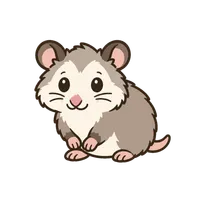
The gray short-tailed opossum is a tiny New World marsupial — pouchless, solitary and strictly nocturnal, with a naked, semi-prehensile tail. Widely kept in research (so its husbandry is unusually well documented for an exotic), it’s a fascinating solo animal for an experienced keeper: it lives alone, comes alive at night, and needs an insect-based, calcium-balanced diet to stay healthy. Honest, and not a beginner pet.
Care at a glance
| Adult size | Body about 10–15 cm, with a tail roughly half the body length; males weigh about 90–155 g and females about 80–100 g (males larger). |
|---|---|
| Lifespan | Realistically about 4–6 years in captivity (a maximum of just over 5 years is well documented). |
| Enclosure | A secure, escape-proof enclosure — a glass tank with a locking, fine-mesh lid suits them. Their tail is semi-prehensile and they use low vegetation, so give climbing branches and a hide/nest box. (Published husbandry keeps single adults in rat- or guinea-pig-sized caging; breeding needs more floor space.) Keep it genuinely escape-proof. |
| Companionship | Strictly SOLITARY — must live alone except for supervised, deliberate breeding. Housed together they’re aggressive and wound one another (even during the breeding “dance”), and adults are aggressive toward offspring. This is a hard rule, not a preference. |
| Temperature | Warmth-dependent — keep the room about 23.5–26.5°C (roughly 74–80°F). (Their normal body temperature is lower than a placental mammal’s, around 32–33°C.) Keep them stably warm. |
| Bedding & substrate | A safe, absorbent bedding (aspen is used in published husbandry) with nesting material — they build nests for warmth. Provide a hide or nest box. |
| Enrichment & exercise | A nest box and nesting material are essential (nest-building is natural). Climbing branches suit their semi-prehensile tail and low-vegetation habits. They’re nocturnal, so expect night-time activity; give them things to explore. |
| Grooming & upkeep | A self-grooming marsupial that needs little coat care. Unlike rodents, their teeth don’t grow continuously, so there’s no gnaw-to-wear-down requirement — but keep an exotic vet for any dental or health concern. Spot-clean the enclosure and refresh nesting. |
| Diet | An insect/animal-protein-based diet is the foundation — in the wild they eat insects, small animals and some fruit. In captivity they’re maintained on insect- and meat-based diets (research colonies use a complete pelleted insectivore/“fox” food, with vitamin supplementation), plus a little appropriate fruit. Feed the diet type, not a random mix, and always provide fresh water. |
| Supplements | Calcium balance matters: an insect/meat diet that’s poorly balanced (too much phosphorus, or fruit-heavy) risks metabolic bone disease, as in other insectivorous exotics — gut-load or dust feeder insects and follow an exotic vet’s guidance on calcium and vitamins (research diets include vitamin supplementation). Don’t over-supplement calcium either; let a vet set the plan. |
🤎 Did you know? — Short-Tailed Opossum fun facts
Little true delights about the short-tailed opossum — each one checked against a named source, no pet-shop myths.
- This little marsupial has no pouch — its newborns crawl to the mother’s belly and cling to a nipple to finish developing in the open.Animal Diversity Web
- It was the first marsupial ever to have its full genome sequenced — a 2007 landmark for understanding how mammals evolved.Mikkelsen et al., Nature (2007)
- Short-tailed opossums shrug off snake venom, resisting the blood damage vipers inflict — a trait now studied for human medicine.Venom-resistance study, PMC (2025)
The pet store gets these wrong
Common myths, kindly corrected — no shame for having believed them.
- A short-tailed opossum is a marsupial, not a rodent — and a solitary one; it must live alone.
- It’s not a cuddly or daytime pet — it’s nocturnal and best observed, not constantly handled.
- A fruit-heavy or unbalanced diet is dangerous — an insect/protein base with balanced calcium prevents metabolic bone disease.
- They’re pouchless — the young attach externally to the mother’s nipples, with no true pouch.
- They’re surprisingly UV/skin-cancer sensitive — avoid strong UV exposure.
Before you buy
- Can you house it completely alone (they must never share)?
- Are you happy with a nocturnal animal to observe rather than cuddle?
- Can you provide an insect/protein-based, calcium-balanced diet?
- Can you keep it stably warm (about 24–26°C) and escape-proof?
- Do you have an exotic vet, and is it legal to keep where you live?
See a vet if…
We can't diagnose from afar — but these are the signs to stop watching and get a professional:
- Weakness, tremors, bendy limbs or fractures — possible metabolic bone disease from an unbalanced diet; see an exotic vet
- Not eating, weight loss or lethargy
- Any skin lesion or growth (they’re prone to UV-related skin tumours) — avoid strong UV and get changes checked
- Wounds (usually from wrongly housing two together)
- Diarrhoea or signs of parasites
Never
- Never house two short-tailed opossums together (except deliberate, supervised breeding) — they fight and wound.
- Never feed a fruit-heavy or calcium-poor diet — it causes metabolic bone disease.
- Never let it get cold — they’re warmth-dependent.
- Never expect a daytime, handleable pet — they’re solitary and nocturnal.
- Never skip an exotic vet — care must be built on marsupial-specific advice.
Common short-tailed opossum questions
How hard are Short-Tailed Opossums to keep — are they good for beginners?
Advanced. A solitary, nocturnal, pouchless marsupial — not a cuddly or daytime pet. It must live completely alone (cage-mates fight and wound each other), needs an insect/protein diet with careful calcium balance, steady warmth, and an exotic vet. Best for an experienced keeper who wants to observe rather than handle.
What do Short-Tailed Opossums eat?
An insect/animal-protein-based diet is the foundation — in the wild they eat insects, small animals and some fruit. In captivity they’re maintained on insect- and meat-based diets (research colonies use a complete pelleted insectivore/“fox” food, with vitamin supplementation), plus a little appropriate fruit. Feed the diet type, not a random mix, and always provide fresh water.
How big an enclosure do Short-Tailed Opossums need?
A secure, escape-proof enclosure — a glass tank with a locking, fine-mesh lid suits them. Their tail is semi-prehensile and they use low vegetation, so give climbing branches and a hide/nest box. (Published husbandry keeps single adults in rat- or guinea-pig-sized caging; breeding needs more floor space.) Keep it genuinely escape-proof.
Do Short-Tailed Opossums need a companion, or can they live alone?
Strictly SOLITARY — must live alone except for supervised, deliberate breeding. Housed together they’re aggressive and wound one another (even during the breeding “dance”), and adults are aggressive toward offspring. This is a hard rule, not a preference.
What temperature do Short-Tailed Opossums need?
Warmth-dependent — keep the room about 23.5–26.5°C (roughly 74–80°F). (Their normal body temperature is lower than a placental mammal’s, around 32–33°C.) Keep them stably warm.
What bedding and substrate do Short-Tailed Opossums need?
A safe, absorbent bedding (aspen is used in published husbandry) with nesting material — they build nests for warmth. Provide a hide or nest box.
What enrichment and exercise do Short-Tailed Opossums need?
A nest box and nesting material are essential (nest-building is natural). Climbing branches suit their semi-prehensile tail and low-vegetation habits. They’re nocturnal, so expect night-time activity; give them things to explore.
What grooming and upkeep do Short-Tailed Opossums need?
A self-grooming marsupial that needs little coat care. Unlike rodents, their teeth don’t grow continuously, so there’s no gnaw-to-wear-down requirement — but keep an exotic vet for any dental or health concern. Spot-clean the enclosure and refresh nesting.
What supplements do Short-Tailed Opossums need?
Calcium balance matters: an insect/meat diet that’s poorly balanced (too much phosphorus, or fruit-heavy) risks metabolic bone disease, as in other insectivorous exotics — gut-load or dust feeder insects and follow an exotic vet’s guidance on calcium and vitamins (research diets include vitamin supplementation). Don’t over-supplement calcium either; let a vet set the plan.
How big do Short-Tailed Opossums get?
Body about 10–15 cm, with a tail roughly half the body length; males weigh about 90–155 g and females about 80–100 g (males larger).
How long do Short-Tailed Opossums live?
Realistically about 4–6 years in captivity (a maximum of just over 5 years is well documented).
What are the signs Short-Tailed Opossums are sick or need a vet?
See a small-animal or exotics vet if you notice: Weakness, tremors, bendy limbs or fractures — possible metabolic bone disease from an unbalanced diet; see an exotic vet; Not eating, weight loss or lethargy; Any skin lesion or growth (they’re prone to UV-related skin tumours) — avoid strong UV and get changes checked; Wounds (usually from wrongly housing two together); Diarrhoea or signs of parasites.
Free tools for your short-tailed opossum
Sources & further reading
This guide was written and fact-checked against these authorities. It's kind, general guidance — not a diagnosis or a substitute for an exotics vet:
- Animal Diversity Web — Monodelphis domestica — solitary/nocturnal, size, omnivore/insect diet, aggression, UV-induced skin cancer
- AnAge — Monodelphis domestica — maximum longevity ~5.1 yr, body temperature, adult weight
- ILAR Journal — laboratory husbandry of Monodelphis — room temp 23.5–26.5°C, caging, pelleted fox-food diet
- Fadem et al., Lab Anim Sci — care & breeding of Monodelphis — weight range, cage floor area, diet with vitamin supplementation
Written and fact-checked by The Hayfold Team against veterinarian-authored sources — if your pet shows a red-flag sign above, see an exotics/small-animal vet promptly.